July 14, 2024
ERP Project Manager vs. ERP Consultant: Roles, Boundaries, and Collaboration
The ERP project manager owns delivery, decision flow, and stakeholder alignment; the ERP consultant owns fit-gap, process, and technical adaptation. When roles blur, scope and budget drift. A field-grounded view of boundaries and collaboration.
Author: Fatih Görgülü


Successful ERP projects depend on the right team setup and clear role boundaries. In this post I detail how separating the duties of the ERP project manager and the ERP consultant makes ERP projects more effective.
Main Differences Between the ERP Project Manager and the ERP Consulting Team
In ERP projects, project professionalism is the responsibility of the ERP project manager. Project professionals know general project management methods and are responsible for planning, monitoring, controlling, and closing. They ensure projects are completed on time, on budget, and to quality standards. The ERP consulting team, on the other hand, handles the technical and functional requirements of the ERP solution. They are responsible for defining solutions that fit the organization and implementing them successfully.
ERP project managers specialize in creating project plans, resource allocation, and schedules. They ensure these plans are executed and revised when needed. They manage scope and changes. The consulting team steps in at implementation and carries out tasks that require technical and functional expertise in line with the project plan.
Contract and Agreement Management
Managing contracts and agreements is another key duty of the ERP project manager. They are responsible for managing contracts and agreements with stakeholders throughout the project. They monitor compliance with contract terms and negotiate when needed. They define project scope and manage scope changes. The ERP consulting team focuses on the technical side of the ERP system: analysis, training, customization, system architecture, data integration, and resolving technical issues.
Dispute and Complaint Management
ERP project managers are responsible for managing disputes and complaints that may arise during the project. They mediate to resolve issues between parties. The ERP consulting team implements and integrates the different modules of the ERP system and ensures they work according to business requirements.
ERP Business Processes and Technical Details
ERP project managers must know the organization's current business processes and operations in depth. Having been an experienced ERP consultant before strengthens them further. This knowledge is critical for integrating the ERP system with business processes. The ERP consulting team knows the technical details and module functionality of the ERP software and ensures the product is configured correctly and ready for use.
Project Goals and Strategic Alignment
ERP project managers ensure project goals align with the organization's strategic goals and steer the project toward long-term objectives. The ERP consulting team focuses on developing and implementing technical solutions and delivering what is needed to meet the organization's technical requirements.
Communication Management and Training
Managing communication and making critical decisions during the project is an important role of the ERP project manager. They enable effective communication among project stakeholders, including ongoing contact with the client sponsor and the client's project management team or board. The ERP consulting team is responsible for training staff who will use the ERP system and for implementation. The ERP consultant and the ERP project manager must work together in harmony for project success.
ERP Consultants' Area of Expertise
The main expertise of the ERP consulting team is the technical and functional side of the ERP software. They specialize in installing, configuring, and adapting the ERP system to the organization's needs. ERP consultants also know the product they implement best. They play a major role in customizing the product and communicating with the software team. Because they know the product's technical details, they communicate effectively with the software team and ensure the right customizations are made.
Why Assigning Project Management to ERP Consultants Is a Mistake
Giving project management responsibility to ERP consultants can risk the project's strategic goals. Project management is not only about technical details; it also includes scope management, budget management, schedule tracking, risk management, and stakeholder communication. It also lets your consultant focus on quality solutions instead of being tied up in project management processes and issues. So assigning project management to ERP project managers is vital for project success.
For ERP projects to be completed successfully, the roles and responsibilities of the ERP project manager and the ERP consulting team must be clearly separated. This separation allows both teams to perform at their best in their own areas and helps the project reach its goals. The best ERP project managers are experienced professionals with ERP consulting experience and project management competence.
Role and Responsibility Comparison
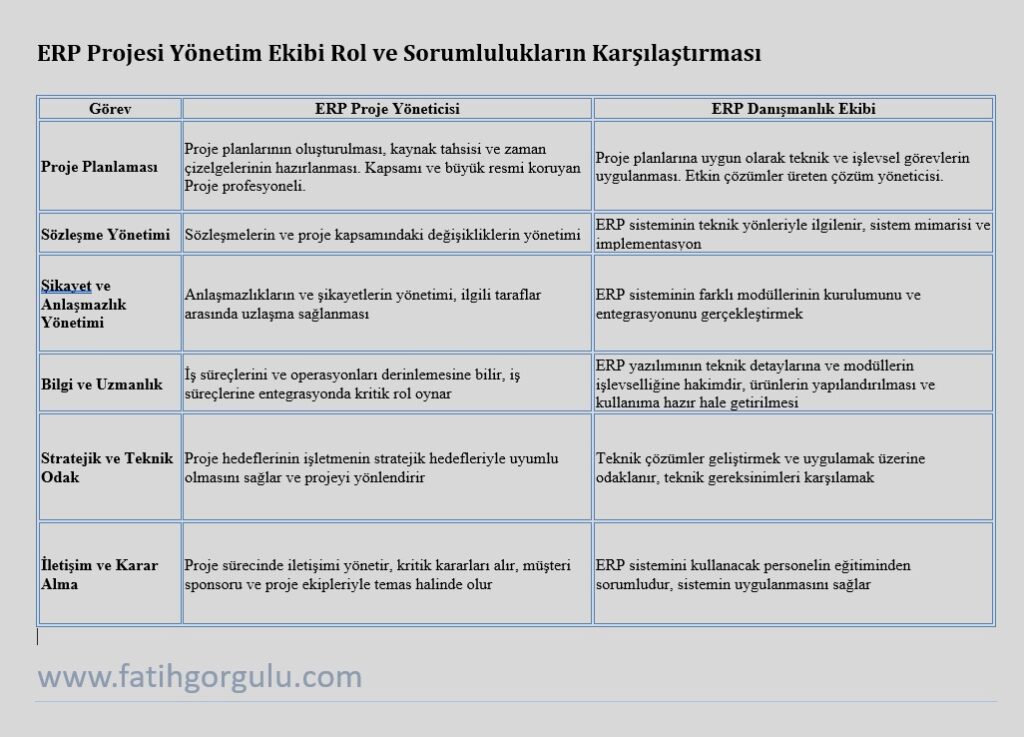
With the clear role boundaries set out in this post, I argue that ERP projects will be run in a healthier and more effective way. Making roles and responsibilities explicit supports project success and the achievement of goals.
Within the Canias cluster
This piece sits inside the Canias, go-live, steering, and fit-gap track. It becomes more useful when read together with the landing page and related guides.
A sensible next step after this read
This page may work as an entry or framing layer; the follow-up should be a guide, a resource, or a conversation point.
Relevant guide
Continue inside the guides
If you want a more structured follow-up, the guides hold the checklists, decision frameworks, and implementation discipline.
Continue →Relevant resource
Resources and checklists
Use the resources surface when you want a checklist, decision note, or downloadable asset to make this topic more concrete.
Continue →Conversation
If this is active, let us talk
If this topic matches a live project, sponsor decision, or delivery pressure, you can get in touch directly.
Continue →Related insights
13 Practical Ways to Get High-Value ERP Consulting
ERP (Enterprise Resource Planning) systems integrate processes, optimize data, and increase efficiency. Successful implementation requires careful planning and the right ERP consulting. Here are methods to get the most from ERP implementation guidance.
Read →The Human Factor in ERP Projects: The Real Success Lever
Success in an ERP project is not only about choosing the right software. The real differentiator is how well people in the organization adapt to the new system. Without user adoption, leadership support, and stakeholder participation, ERP projects are bound to fail. Successful ERP projects share a culture open to change.
Read →How to Run a Successful ERP Kickoff Meeting
ERP projects are major transformation efforts for organizations, and managing these processes successfully directly affects the project's overall success. A successful ERP kickoff meeting strengthens the project's foundations and keeps the whole team focused on the same goal. Here is how I manage this process.
Read →