December 18, 2025
7 Practical Takeaways for Project Professionals from PMI Global Summit 2025
At PMI Global Summit 2025 in Phoenix last month I saw again: project management is not just producing documents—it is making the right decision at the right time, aligning stakeholders to the same goal, and managing change. Standards are evolving, the AI agenda is accelerating, the community is growing. What still makes the difference in the field is the same: discipline + clarity + relationship management.
Author: Fatih Görgülü
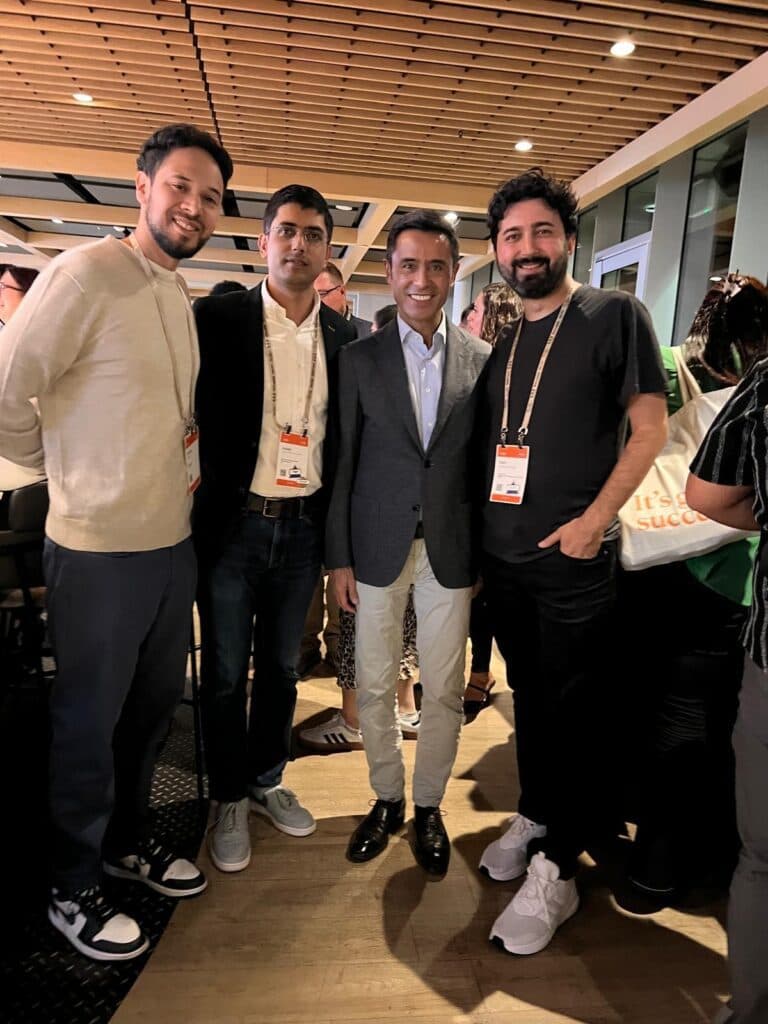
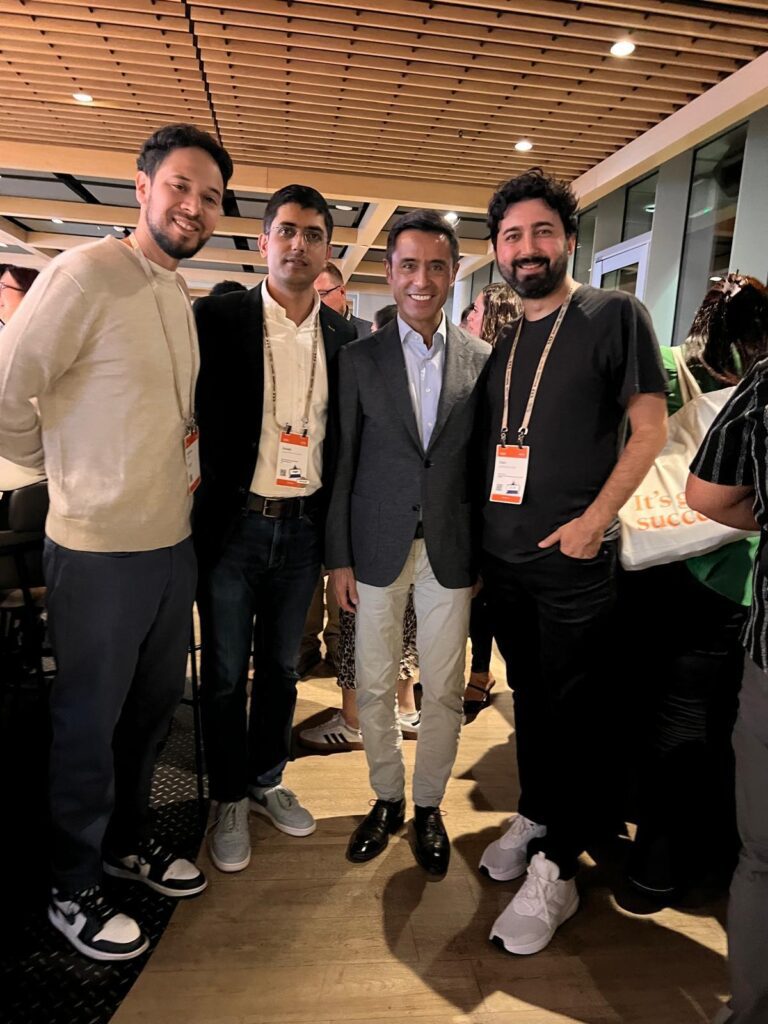
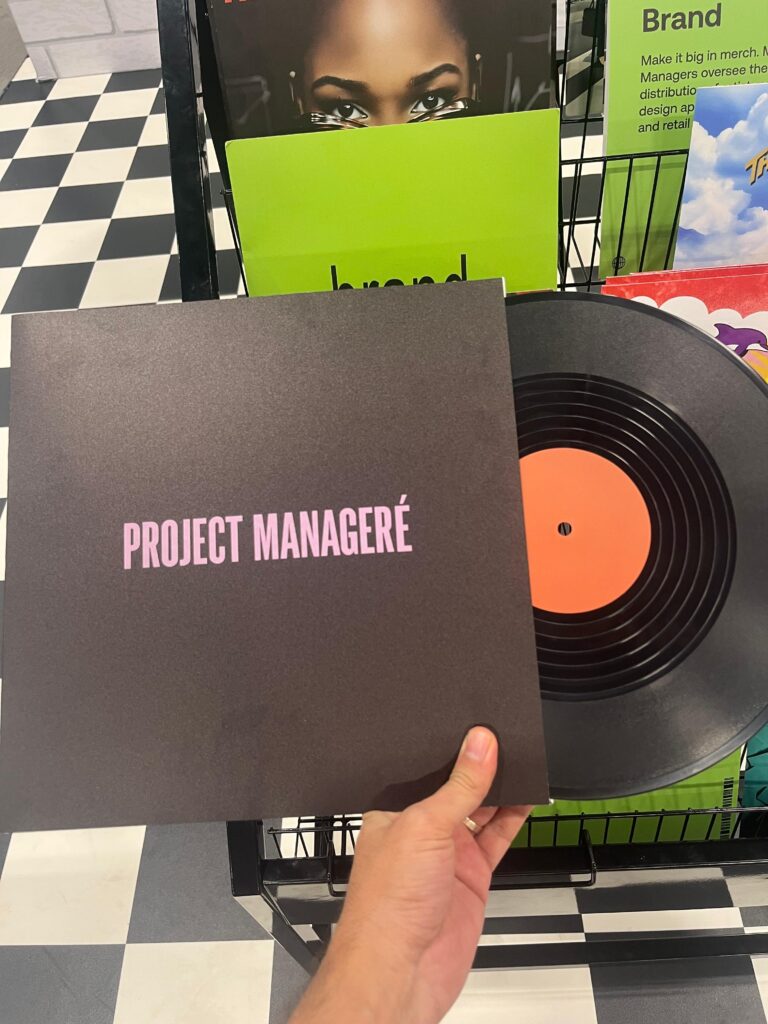
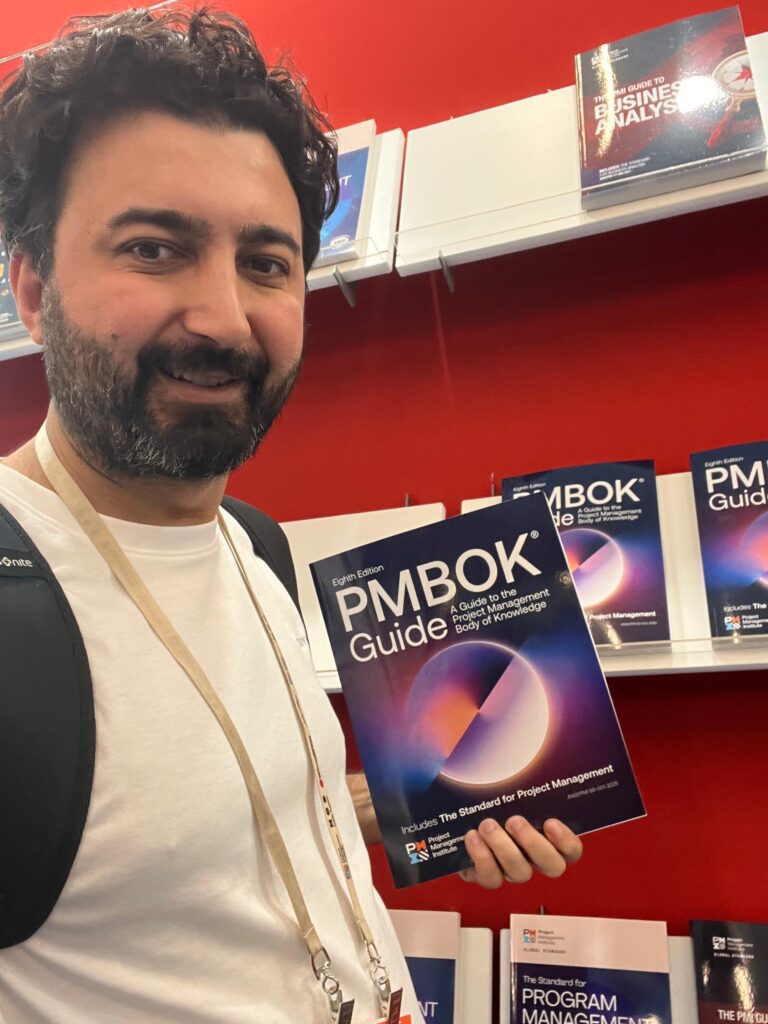
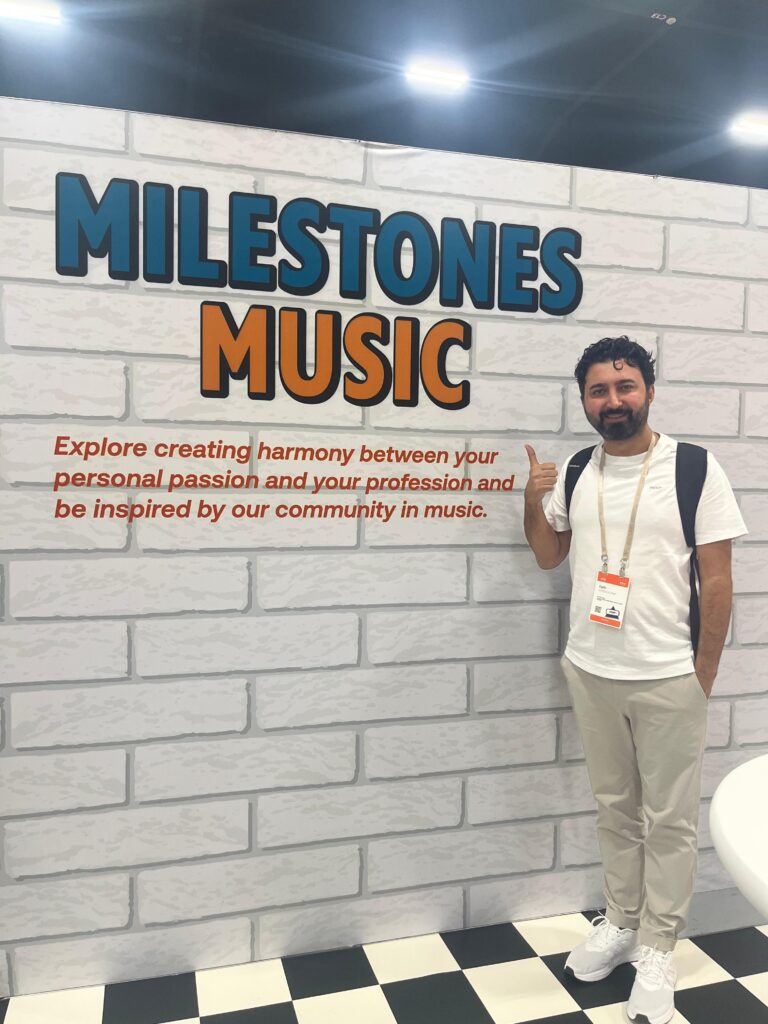
At PMI Global Summit 2025 in Phoenix last month I saw again: project management is not just producing documents—it is making the right decision at the right time, aligning stakeholders to the same goal, and managing change. Standards are evolving, the AI agenda is accelerating, the community is growing. What still makes the difference in the field is the same: discipline + clarity + relationship management.
In this post I share 7 concrete takeaways from the Summit that we can put into practice.
1) PMBOK® 8: Not a “rollback,” but evolution in the right direction
The best way to put it: PMBOK® 8 is not a rollback—it is an evolution. The principle-based structure of PMBOK® 7 is kept; it does not return to a prescriptive structure like PMBOK® 6. The language is simplified and the five process groups are repositioned not as “rules” but as flexible anchor points.
To me the real value is this: PMBOK 8 ties three questions together more clearly: Why? (value) — What? (outcome) — When? (flow)
Put it into practice: At project start, make this triple clear: 1) What value will we deliver? 2) What outcomes will we show? 3) At which decision points do we change direction?
Mini summary: PMBOK 8 strengthens the “value–outcome–flow” link in clearer language.
2) As the PMP ecosystem grows, the profession’s common language gets stronger
The chart on stage was clear: 8 PMPs in 1984 → 1.6M+ active PMPs in 2025. That scale shows project management has become a common working language globally. As this language grows, expectations clarify, governance matures, and success becomes more measurable.
Put it into practice: More important than “how many PMPs” is how the PMP language shows up in your decision system. Reading the books matters, but so does internalizing the essence and making it useful in the field.
I say the same about music: you can read hundreds of harmony books; in the end you won’t retain everything. What stays with you is what filters into your style and your output. Project management is like that: knowledge remains, but what really matters is the value you produce.
Mini summary: Turning the common language into your decision mechanism makes more difference than certificate count.
3) Project success rate at 50.5%: Small increase, large scale effect
Global project success rate went from 47.8% in 2024 to 50.5% in 2025. A few points may look small, but at scale that is a huge total effect.
Put it into practice (4 disciplines): Prioritization, designing stakeholder expectations up front, not deferring risk/dependencies, and a regular follow-up rhythm.
Mini summary: Success is grown by the consistency of basic disciplines, not a “miracle method.”
4) PMI Infinity and AI: Not a tool, but decision support
At the Summit, AI was treated as a practical topic, not just a trend. Solutions like PMI Infinity give the project manager decision quality as much as speed.
Put it into practice: Drafts for kickoff/scope, assumption→risk conversion, message drafts by stakeholder, turning meeting output into “decision–action–owner–date,” and for change requests generating impact+options+recommendation.
Mini summary: Those who get ahead are not just “using AI”—they make better decisions and lead with AI.
5) Leadership: The biggest mistake is reacting too fast
The lesson that stayed with me most: most leadership mistakes come from reacting too quickly. Discipline means pausing, widening the time horizon, and acting not on what seems urgent today but on what will matter soon.
Put it into practice: What happened? What decision is really needed right now? What’s the impact in 4 weeks? What tone keeps the relationship intact?
Mini summary: In a crisis, leadership is not speed—it is being able to pause at the right moment.
6) Radical Candor: Without distance, candor can turn into attack
Kim Scott’s “Radical Candor” reminds us: without distance, candor can become attack and empathy can become avoidance. This is the skill of stepping back from emotional urgency before speaking.
Put it into practice (template): “Here’s what I observe… Here’s the impact… Here are our options… Here’s my recommendation because… Here’s what I need from you / your decision…”
Mini summary: When clarity and calm go together, trust is not damaged.
7) Transformation is no longer far away—it is happening in the moment (Phoenix/Arizona Waymo experience)
Phoenix/Arizona’s city layout and “tech city” feel had already impressed me. But the best surprise of the day was the Waymo “Jaguar” driverless car experience. It felt much more comfortable and safe than I expected.
That experience made me think: this technology is no longer “an interesting demo”—it is an inevitable transformation already part of daily life. The same is true in our world: AI, automation, data… they are moving from “optional” in projects to standard.
Mini summary: The Waymo experience reminded me that transformation is no longer somewhere in the future—it is in daily life and inevitable.
Related insights
What are hypercare exit criteria?
Hypercare exit criteria define when the intense post go-live support period can safely move into normal operations. Without them, hypercare either closes too early or turns into an open-ended support phase with unclear scope.
Read →What is Fit-Gap? Managing scope risk in ERP projects
Fit-Gap is not a workshop for collecting every desired change. In an ERP project, it should make the difference between standard use, process decision, configuration, development, phasing, and rejection visible enough for real scope decisions.
Read →A PMO Is Not a Reporting Office: A Decision System
A PMO may collect project information, but its real value is not the volume of reports it produces. A useful PMO makes decisions visible, clarifies ownership, improves escalation, and turns project management from personal effort into organizational discipline.
Read →